
What Is Last-Mile Delivery? A Simple Guide for E-Commerce Brands

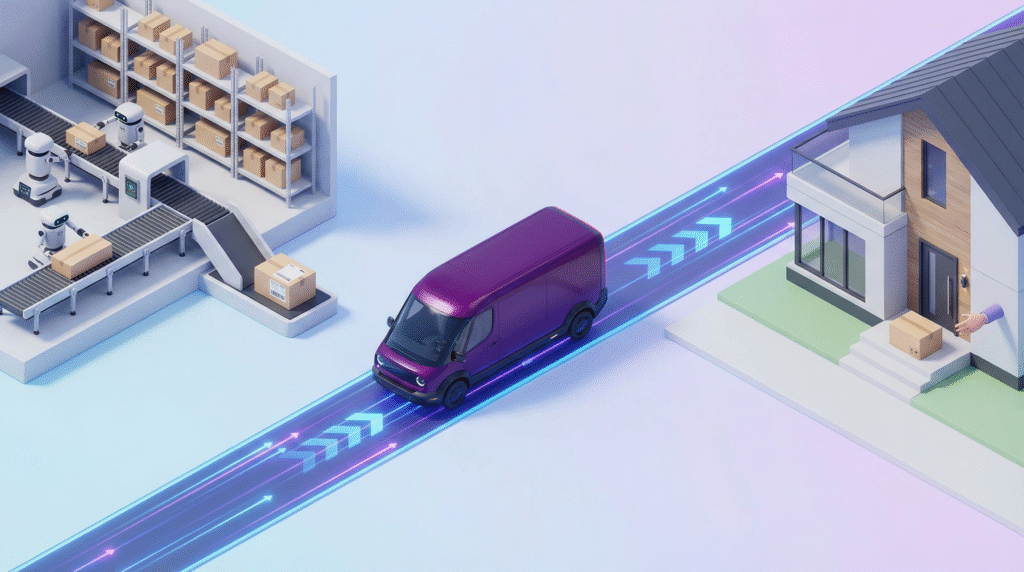
Most customers do not judge your brand on your warehouse process. They judge it on the moment the parcel arrives, and whether they had to chase for updates. When delivery feels messy, customers assume the business is messy too. That is how late arrivals, missed attempts, and vague tracking turn into refunds, complaints, and reviews that hurt repeat orders.
Last-mile delivery is the final stretch of fulfilment, from a local hub to the customer’s doorstep. It is where the cost per drop is highest and where small problems snowball fast. Understanding what last-mile delivery is helps e-commerce teams fix the weak points early, tighten communication, and protect customer trust as order volume grows. Tracked Transport supports brands with reliable last-mile delivery, careful handling, and clear visibility through to proof of delivery.
What Last-Mile Delivery Means for E-Commerce Brands
Last-mile delivery is the movement of an online order from a local distribution point to the customer’s address. It matters more than any other stage because it is the only part the customer experiences directly. A great product and smooth checkout can still be overshadowed if the delivery feels uncertain or late.
When people ask, “what is last-mile delivery,” they usually mean the practical parts of the journey, courier allocation, route planning, customer updates, delivery attempts, and proof of delivery. All of that happens in the final leg, and it is why last-mile delivery has such a direct impact on customer satisfaction, customer service load, and brand perception.
Why the Last Mile Breaks the Customer Experience
Last-mile issues often start with ordinary, everyday friction. The driver hits traffic, parking is limited, a building needs an access code, or delivery instructions are unclear. That delay then pushes the rest of the route behind schedule. Customers see vague tracking, and support teams get the same messages repeatedly, “Where is my order?” and “When will it arrive?”
Missed delivery attempts make the problem worse. Each re-attempt adds cost, increases operational stress, and raises the chance of refunds or chargebacks. If a brand uses multiple carriers and cannot see performance consistently, it becomes hard to spot patterns, fix the real cause, or hold delivery standards day to day.
How Strong Last-Mile Logistics Improves Performance
When the last mile runs well, the whole post-purchase experience feels calm. Parcels arrive when expected, tracking updates make sense, and customers do not feel the need to chase the brand. That calm experience is what drives better reviews and repeat orders over time.
Strong last-mile logistics also protects internal operations. Clear visibility reduces support tickets and helps teams intervene early when a delivery is slipping. Better routing and dependable courier capacity reduce missed attempts and improve cost predictability. For many brands, the goal is not “faster at all costs,” it is consistent, reliable delivery performance that customers learn to trust.
Sustainability also shows up here. When routes are planned efficiently and deliveries are executed with fewer re-attempts, you reduce fuel waste and unnecessary miles. That improves both operational efficiency and environmental impact, without forcing the customer experience to suffer.
What Makes an Effective Last-Mile Partner for E-Commerce
A last-mile partner should make delivery easier to manage, not harder to explain. The basics need to be strong: reliable on-time performance, fewer failed deliveries, and clear tracking that customers understand. Just as important is what happens when something goes wrong, because exceptions are where most carrier experiences fall apart.
The right partner has responsive communication, fast exception handling, and proof of delivery that closes the loop properly. They also fit your fulfilment workflow, whether that means simple integrations, consistent reporting, or operational support when volume spikes. Every doorstep handover reflects your brand, so delivery standards need to match the experience you are selling online.
Simple Breakdown of the Last-Mile Delivery Process
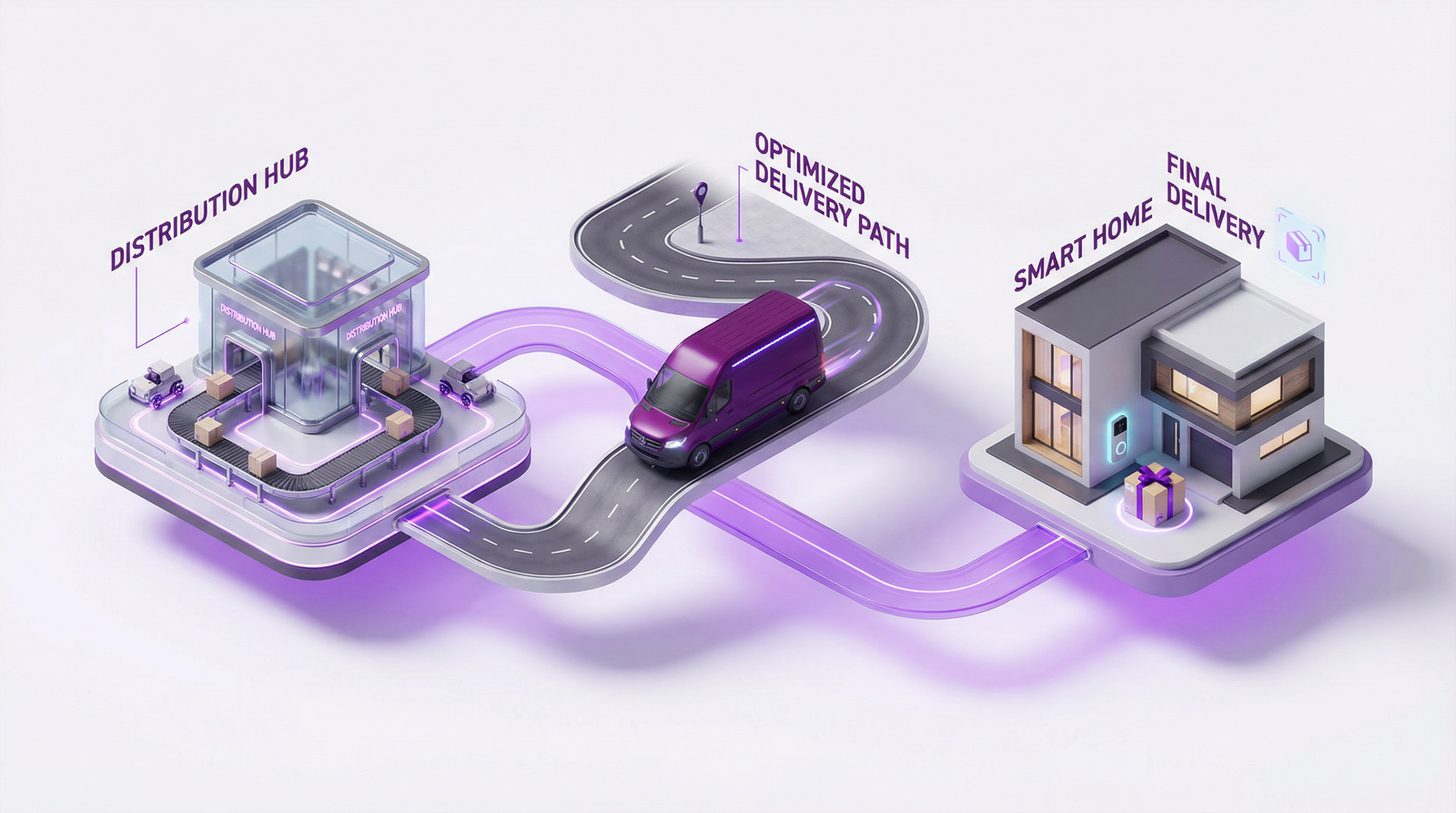
The last-mile delivery process follows a familiar flow: parcels leave a local hub, routes are planned, couriers are assigned, tracking goes live, and delivery is attempted with proof of delivery captured at the end. Each step matters because each step affects customer expectations and operational costs.
A single weak link, such as poor routing, unclear updates, or unreliable proof of delivery, can trigger delays and support tickets. That is why brands treat the last mile as a system, not a single courier event.
Parcels dispatch from a local distribution hub
This is the handoff from warehouse operations into delivery execution. Parcels are scanned, sorted, and loaded for the day’s routes, often for same-day or next-day delivery depending on service level. When dispatch is organised, fewer parcels get delayed due to handling errors, and the route starts on time rather than playing catch-up from the first hour.
Routes are optimised based on traffic and delivery priorities
Route planning is not just choosing the shortest distance. It is balancing real traffic conditions, drop density, time windows, and the time it takes to deliver at each stop. In high-volume areas, route quality decides whether deliveries stay on schedule or slide into late-day failures.
A courier is assigned and tracking becomes visible to the customer
Once a courier is assigned, the customer expects meaningful updates. Tracking reduces uncertainty, lowers support messages, and improves trust, but only if it is clear and accurate. For the business, courier assignment also supports accountability, because delivery outcomes can be linked back to routes and performance.
The parcel moves through the courier network with live updates
Live updates help both the customer and the fulfilment team. Customers want confidence the parcel is still on track. Fulfilment teams need early warning when something changes, so they can act before a delivery attempt fails. This is where real-time visibility becomes a performance tool, not just a customer feature.
Delivery attempts are made with minimal delay
This is the moment customers remember. Delays often come from access issues, parking limits, missing delivery instructions, or customer availability. When communication is strong and routes are realistic, the handover is smoother, re-attempts drop, and operational waste is reduced.
Proof of delivery confirms successful arrival
Proof of delivery is what closes the job properly. It might be a signature, a photo, or another confirmation method depending on the delivery type. Clear proof of delivery helps resolve disputes quickly, reduces “not received” claims, and gives both the customer and the brand confidence that the parcel arrived at the right place.
Local Delivery Considerations for Brands in London
London delivery comes with predictable friction. Traffic changes quickly, parking is limited, and some routes include restricted access streets. Many deliveries go to flats, gated buildings, reception desks, or locations that require access codes and clear instructions. These details matter, because they are exactly where delays and failed attempts tend to happen.
Brands delivering in London benefit from partners who can keep arrival times predictable and manage exceptions fast. When something slips, quick communication and clear tracking prevent the issue from becoming a long support thread, and they protect the customer experience even when the route is under pressure.
Improve Your Delivery Experience With Tracked Transport
Once you understand what last-mile delivery is, the next step is making it predictable. Predictable delivery means fewer failed attempts, clearer tracking, reliable proof of delivery, and a fulfilment process your team can trust day after day.
Tracked Transport supports e-commerce brands across London with dependable last-mile logistics, visibility through delivery, and delivery standards designed to reduce customer complaints and operational friction.
Frequently Asked Questions About Last-Mile Delivery for E-Commerce Brands
Last-mile delivery is the final stage of fulfilment, where a parcel moves from a local hub to the customer’s address. It strongly shapes customer satisfaction because it is the only delivery stage the customer experiences directly.
On-time arrival and clear tracking build trust. Delays, missed attempts, and unclear updates increase support volume, refunds, and negative reviews.
Last-mile delays are often caused by traffic, access issues, routing inefficiencies, and limited courier capacity, especially in dense delivery areas.
Better routing, real-time tracking, clear customer communication, dependable courier performance, and strong exception handling all reduce missed deliveries and re-attempts.
When customers know when the courier is arriving, they are more likely to be available and ready to receive the parcel, which reduces missed handovers.
Yes. It is often the costliest stage because it is labour-heavy and time-heavy, with individual addresses, doorstep handovers, and re-attempt risks that increase cost per delivery.
Look for clear tracking, consistent on-time performance, reliable proof of delivery, fast exception handling, and a workflow that integrates smoothly with fulfilment operations.
Route optimisation tools, integrated tracking platforms, and proof of delivery systems improve visibility, reduce delays, and help keep delivery standards consistent.
In logistics, last-mile delivery refers to the final movement of goods from a distribution point to the end receiver, where the customer experience is ultimately judged.